Table of Contents
Google started rolling out the November 2026 core update on Tuesday, November 10, at 10:06 a.m. Pacific. Google says it “applies globally and to all languages” and “may take up to 2 weeks to complete.” As of Monday, November 16, the Search Status Dashboard still showed it in progress. If your rankings, calls, or form fills moved last week, this update is one possible reason. For a small business it is not the only one, and the timing this year makes it easy to misread.
A full two-week rollout ends around November 24. Thanksgiving is November 26, Black Friday is November 27, and Cyber Monday is November 30. Google’s own method for judging a core update says to wait a full week after it finishes, then compare that week with a week from before it started. For most U.S. businesses, that “after” week is Thanksgiving week. Below: what Google has confirmed, what else changed in Search the same week, and a comparison plan that holds up when holiday demand skews every number you look at.
What Google has confirmed about the November 2026 core update
The confirmed facts are short:
- Start: November 10, 2026, logged on the Google Search Status Dashboard.
- Scope: global, all languages.
- Length: “up to 2 weeks.” The March 2026 core update took 12 days and 4 hours; the May update took 11 days and 21 hours, per the dashboard.
- Purpose: on LinkedIn, Google’s Search Central team called it “a regular update designed to better surface relevant, satisfying content for searchers from all types of sites.” Search Engine Journal noted that Google used the same sentence for the March update.
- New guidance: none. Search Engine Land reported that Google did not publish advice specific to this update and pointed site owners back to its existing core update documentation.
This is the third core update of 2026, after March and May. Between May and November, Google ran three spam updates (June, August, and September). Spam updates and core updates are different jobs. A spam update targets specific policy violations such as scaled content or hacked pages. A core update reassesses how Google ranks content in general and does not single out sites. If you are still sorting out whether your site got caught in the September spam update, our checklist for the September spam update covers those policy checks. This post is about the broad reshuffle.
Google’s core updates documentation uses a restaurant list as its analogy: if a friend asks for your top 20 restaurants and new places have opened since you wrote the list, some old favorites drop off. They didn’t get worse; other places got added. For most small business sites, a drop after a core update means a competitor’s page now answers the search better, and your page may be as good as it was in October.
Four other things changed in Search the same week
A core update gets blamed for everything that moves during its rollout. In November 2026, at least four other changes landed within days of it. Write these dates down before you look at your reports.
| Date | What changed | What it can do to your numbers |
|---|---|---|
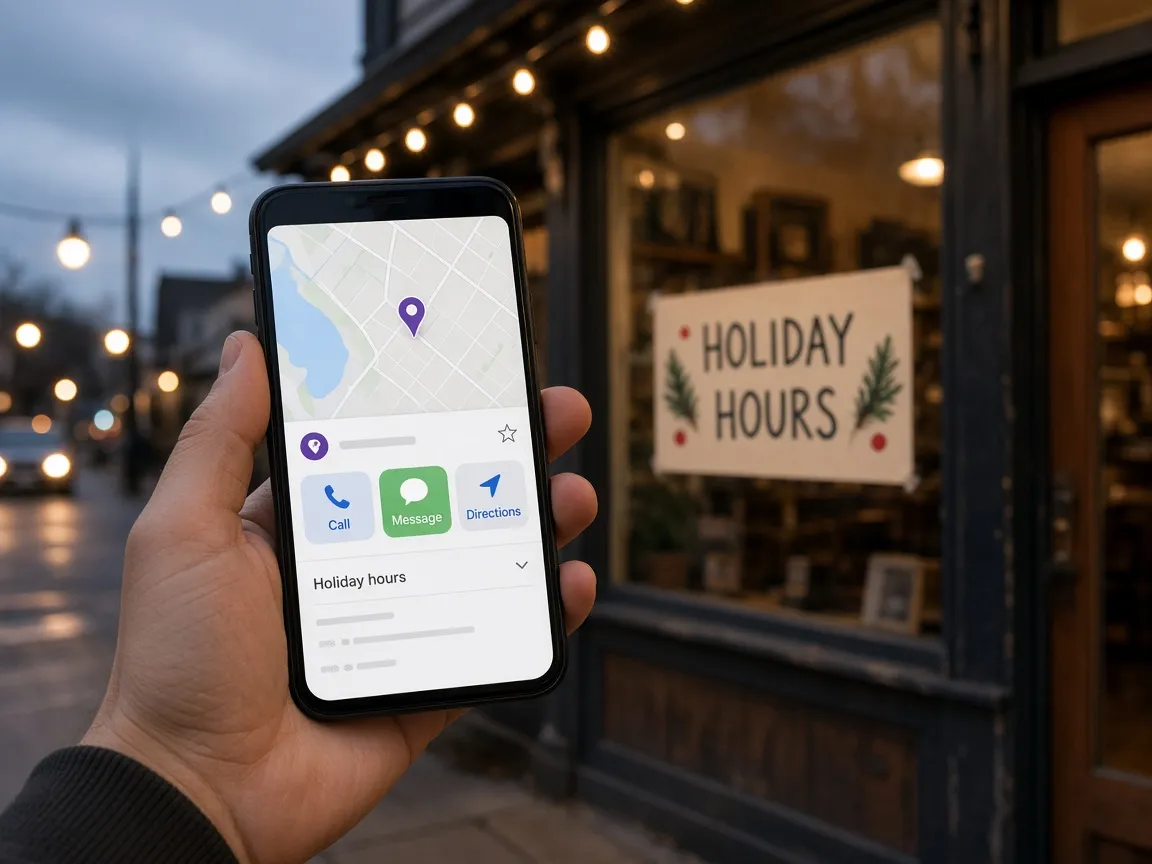
| Nov 5 | Google’s Small Business Bulletin said the Message button now sits next to Call on Google Maps listings (Android and iOS) for businesses with chat set up | Some people who used to call may tap Message instead. Calls in your Business Profile can dip while total contacts hold. |
| Nov 9 to 11 | Google confirmed a logging error in Search Console’s Generative AI performance report | Lower reported AI Overview and AI Mode impressions for those three days. Google says it “affects data logging only.” |
| Nov 10 | November 2026 core update begins | Ranking movement in regular web results for up to two weeks |
| Nov 12 | Gemini 4 Hydrogen became the default model in AI Mode and is used for “your hardest questions in AI Overviews,” per Google | Which sites get cited and linked in AI answers may shift, separate from the core update |
| Nov 26 to 30 | Thanksgiving, Black Friday, Small Business Saturday, Cyber Monday | Search demand changes by industry. Retail and restaurants spike; many B2B and professional service searches slow down. |
The Search Console bug is the easiest one to misread. Barry Schwartz at Search Engine Roundtable pointed out that the bug window overlaps the first days of the core update. If you opened the Generative AI report on November 12 and saw AI impressions fall off a cliff, that dip is a reporting problem, not lost visibility. Google lists these on its Search Console data anomalies page, which is worth checking any time a chart looks strange.
If you track AI citations or referrals, log the Hydrogen change too. Google’s announcement says the new model runs more searches across the subtopics of a question and connects people “to a broader range of helpful links than before.” Google gave no link counts. If your AI referrals change in late November, the model switch on November 12 is as likely a cause as the core update. Our post on tracking ChatGPT and AI referral traffic in GA4 explains how to separate those visits from the rest of your traffic.
What to do while the update is still rolling out
Google’s advice during a rollout amounts to: don’t react yet. Its documentation warns against “quick fix” changes, such as removing a page element because you heard it was bad for SEO, and calls deleting content “a last resort.” Rankings can swing up and back down during a rollout, so a change you make on day four can’t be judged against anything clean.
That does not mean you touch nothing. Split this week’s work into two lists.
Do now:
- Fix real faults. A site that is down, a page accidentally set to noindex, a contact form that stopped sending, a broken phone link on mobile. These cost you leads whether or not an update is running.
- Set holiday hours on your Google Business Profile for Thanksgiving, the day after, and any December closures. Wrong hours in Maps cost you visits and reviews during the busiest searching weeks of the year.
- If you have Business Profile chat turned on, check who answers it. With the Message button now next to Call on Maps, an unread inbox is sitting in one of the most visible spots on your listing.
- Keep publishing and keep running promotions you already planned. Core updates don’t punish activity.
- Export your baseline (next section) and start a change log.
Leave alone until the rollout ends and a week passes:
- Rewriting service pages that bring in calls and form fills
- Deleting or merging old blog posts in bulk
- Changing URLs, navigation, or site structure
- Re-dating old posts to make them look fresh
- Buying links or anything sold as a “core update recovery” package
Save a Search Console baseline before the holidays muddy it
Google’s recommended comparison uses a week from before the update started. For this update that is Tuesday, November 3 through Monday, November 9. Export it now, while it is easy to find.
- In Search Console, open Performance, then Search results.
- Set the date range to custom: November 3 to November 9, 2026.
- Turn on all four metrics: clicks, impressions, CTR, and average position.
- Export the Queries and Pages tabs. Search Console’s export gives you a spreadsheet with both.
- Do the same for the matching week last year. Search Console keeps 16 months of data, so the same holiday week from 2025 is still available. More on why below.
- Note your lead numbers for the same week: calls, form submissions, bookings, quote requests. Search Console shows searches and clicks. It doesn’t show customers.
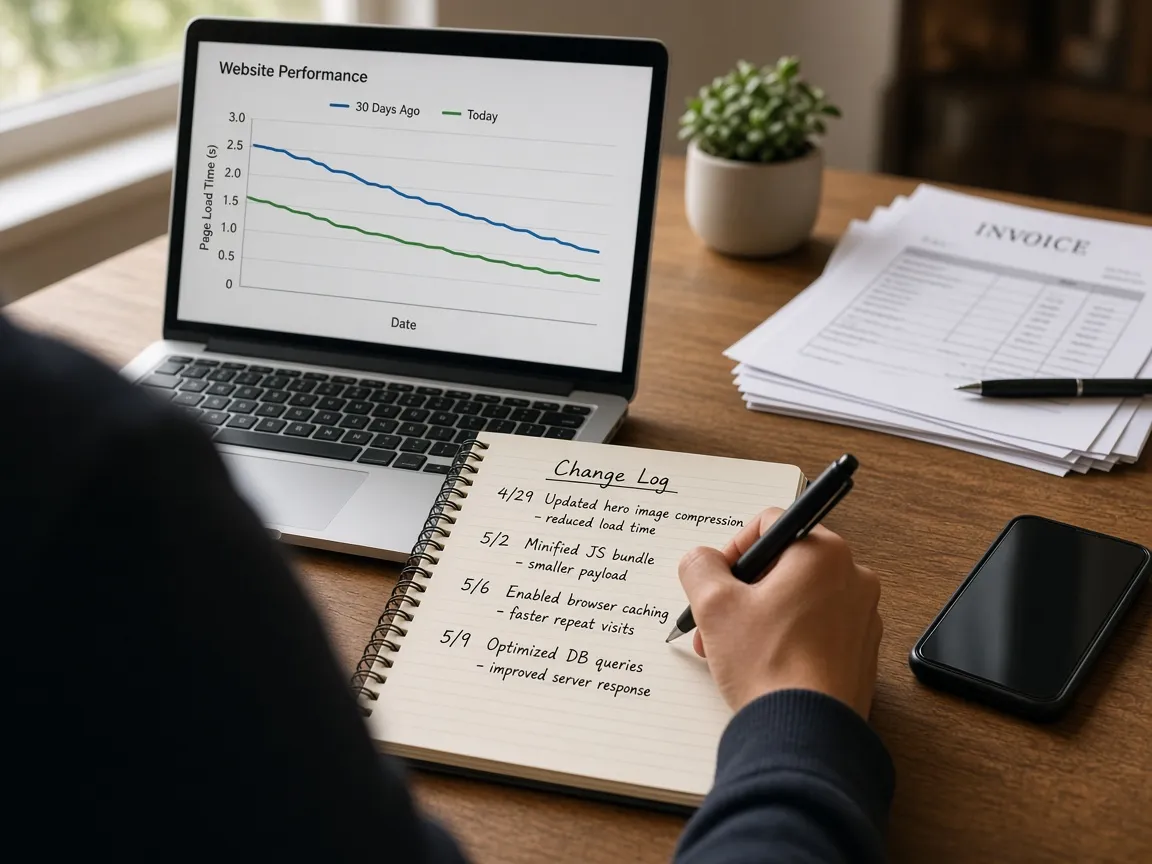
Then start a plain change log. A notebook or a shared doc works. List the dates above, plus anything you changed yourself: a new page, a price change, a site redesign, an ad campaign that started or stopped, holiday hours. When you review the numbers in December, the log is what lets you tell an update apart from your own changes and from the calendar.
How to judge the core update when the “after” week is Thanksgiving
Google’s method has three steps: confirm the update finished on the dashboard, wait at least a full week, then compare that week with a week from before the rollout. Its guide to debugging traffic drops also lists seasonality and reporting glitches as separate causes and suggests using Google Trends to check for them. This November, you need all of that at once. Four habits make the comparison more honest.
1. Read position before clicks
Holidays change how many people search. They change much less about where Google ranks you. Clicks and impressions mix both. Average position for a specific query mostly reflects ranking.
So start with your 10 to 20 most valuable queries, the ones that bring in customers, and compare average position query by query. If “emergency plumber” brought you 40 percent fewer impressions the week after Thanksgiving but your average position held at 3, people searched less. Nothing about your ranking needs fixing. If your position went from 3 to 14 and stayed there, that is a ranking change worth investigating.
Average position has its own quirks. It is an average across every time you appeared, so a query where you suddenly appear for a new, deeper result can pull it down without anything getting worse. Check the queries that matter to your business one at a time rather than reading the site-wide average.
2. Line up holiday weeks with holiday weeks
Comparing Thanksgiving week 2026 with an ordinary week in early November tells you a lot about Thanksgiving and very little about Google. Add a second comparison: Thanksgiving week 2026 against Thanksgiving week 2025. Thanksgiving fell on November 27 in 2025, so line up the weeks by the holiday, not by the calendar date.
If the year-over-year comparison looks normal for your business and the week-over-week comparison looks terrible, the calendar is doing most of the damage. If both look bad on the same pages, take the update seriously.
3. Split brand searches from everything else
People who search your business name already know you. Those searches move with your reputation, your ads, and word of mouth. A core update mostly shows up in non-brand searches like “roof repair near me” or “bookkeeper for contractors.”
In the Performance report, add a query filter and choose Custom (regex). Enter your brand name and common misspellings, separated by a vertical bar, and set it to match. Then switch the filter to “doesn’t match” to see only non-brand queries. Compare each group separately. A drop in brand searches during the holidays usually reflects demand. A drop in non-brand rankings is where a core update would show.
4. Put leads next to traffic
A small business can lose 20 percent of its search clicks and lose zero customers if the lost clicks were from people who were never going to buy. The reverse also happens. Put calls, form fills, and bookings from organic search next to the Search Console numbers for the same weeks. If you need a way to tie leads to search and put a dollar figure on them, our guide to working out what search leads are worth and when SEO pays back walks through the tracking and the math.
Small drop or large drop: what each one calls for
Google gives two examples. A page that slips from position 2 to 4 is a small drop, and Google says there is “no need to take drastic action.” It goes further and recommends against changing content that is already performing well. A page that falls from position 4 to 29 is a large drop that calls for a deeper look.
For a small business, here is a practical way to sort what you find in December:
| What you see | Likely meaning | What to do |
|---|---|---|
| Impressions down, positions steady on your main queries | Holiday or seasonal demand | Nothing on the site. Check Google Trends for your core service term to confirm. |
| A few positions lost on some queries (for example 2 to 4, or 6 to 9) | Normal reshuffling | Leave the pages alone. Recheck in January. |
| One or two pages fell from page 1 to page 3 or lower | Those pages lost out to better answers | Search the query, study what now ranks above you, and improve those specific pages. |
| Most non-brand queries fell hard, across the site | Google reassessed the site as a whole | Work through Google’s self-assessment questions for the whole site, ideally with someone outside the business. |
| Traffic fell on a single day, then returned | Volatility during rollout, or a reporting glitch | Check the data anomalies page. Don’t act on it. |
| AI Overview or AI Mode impressions fell Nov 9 to 11 only | Confirmed logging bug | Annotate it and move on. |
Google also notes that improvements can take months to show and that the biggest recoveries often come with the next core update. That is another reason not to rush. A fix made in a panic on November 18 is unlikely to show up before the next update anyway.
If a service page lost ground, compare it with what replaced it
When a page that used to bring in leads drops a long way, the most useful exercise is a side-by-side. Search the query in a private browser window, open the top three results, and ask what they give the searcher that your page doesn’t. For local and service businesses, the gaps tend to be concrete:
- Real proof of the work. Your own photos of finished jobs, your team, your shop or office. Stock photos tell a searcher nothing about you.
- Clear service details. What you do, what you don’t do, where you work, and how fast you can respond.
- Prices or ranges, if you can stand behind them. A page that says “call for a quote” with no context loses to one that explains what drives the price and gives a typical range. Only publish numbers you actually charge and will keep current.
- Answers to the questions people ask on the phone. Do you charge a trip fee? Are you licensed in this state? How long does a job like this take? What happens if something goes wrong?
- Who is behind the business. Names, licenses, years in the trade, where those matter to the customer.
Those same details help with AI answers. Google says Hydrogen handles multi-part questions better, and a page that answers the follow-up questions in plain text gives it more to work with than a page built around a slogan and a contact form. Google’s page on creating helpful, reliable, people-first content has the full list of self-assessment questions. Read it with one specific page open next to it, not as general advice.
If one page lost and the rest of the site held, fix that page and leave the rest alone. Rewriting a whole site because one page slipped is how small businesses turn a small loss into a large one.
Don’t forget the map pack
For many local businesses, most new customers come from the map results and the Business Profile, not the blue links. Search Console doesn’t report your Maps performance. Your Business Profile’s Performance view does, with views, searches, calls, direction requests, and website clicks.
Google’s local ranking help page says local results are “mainly based on relevance, distance, and popularity,” and that “there’s no way to request or pay for a better local ranking.” It describes prominence as how well-known a business is, based partly on how many websites link to it and how many reviews it has. Those are profile and reputation signals, not the page-quality questions a core update asks. So if your web rankings held but your map visibility fell, look at reviews, competitors, and profile details before blaming the update. Read your profile’s numbers alongside Search Console, and read calls and messages together this month, because the Message button moved up on Maps on November 5.
During the holidays, the profile basics matter more than usual. Special hours, current photos, a working phone number, replies to recent reviews, and accurate service areas are things you can fix today without waiting on any rollout. Our Google Business Profile optimization page covers what we look at when we audit a profile.
A short timeline for the next six weeks
- This week (Nov 16 to 20): export the November 3 to 9 baseline and last year’s matching weeks. Start the change log. Fix real faults. Set holiday hours.
- Around Nov 24: check the Search Status Dashboard for the completion date. Don’t assume it ended on day 14; it may end earlier or later.
- The week after it ends: leave the site alone and let a full week of data build up. For most businesses that week includes Thanksgiving.
- Early December: compare position by query, brand versus non-brand, and year over year. Put leads next to clicks. Sort what you find with the table above.
- December and January: improve only the pages that lost real ground, one at a time, and log each change with its date.
If you’d rather have someone else read the numbers, the Intuico Digital SEO team works with small businesses nationwide on this kind of review: what moved, why, and which pages are worth changing. Bring the baseline export and your change log, and we’ll help you sort out whether the November core update hit your site or the holidays did.
Sources
- Google Search Status Dashboard, ranking incident history
- Google Search Central: Google Search’s core updates and your website
- Google Search Central: Debugging drops in Google Search traffic
- Google Search Central: Creating helpful, reliable, people-first content
- Search Engine Land: Google November 2026 core update rolling out now (Nov 10, 2026)
- Search Engine Journal: Google’s November 2026 Core Update Starts Rolling Out (Nov 10, 2026)
- Search Engine Roundtable: Generative AI performance report data bug, Nov 9 to 11 (Nov 12, 2026)
- Google: Google Search gets a major upgrade with Gemini 4 Hydrogen (Nov 12, 2026)
- Search Engine Journal: Google Gemini Business Profile tools are coming to Workspace (Nov 6, 2026)
- Google Business Profile Help: Tips to improve your local ranking on Google