
Table of Contents
An AI receptionist for a small business answers your phone when you can’t: after hours, while you’re on a job, or when two calls come in at once. It can answer common questions, book appointments, take intake details, and pass urgent calls to a person. Published plans start around $49 to $199 a month. Whether one pays for itself comes down to one number most owners have never measured: how many calls you miss, and what those calls are worth.
This guide covers what an AI receptionist does, what it costs compared with an answering service or a hire, the missed-call math, where these systems frustrate callers, and how to test one for 30 days before you commit.
What an AI receptionist does on a small business phone line
An AI receptionist (also sold as an AI voice agent or AI answering service) is software that picks up your business line and talks with the caller in natural speech. A typical setup handles:
- Answering every call, including nights, weekends, and the lunch hour.
- Common questions such as hours, service area, and whether you handle a certain job.
- Booking into the calendar you already use.
- Intake, asking your qualifying questions and recording the answers.
- Transfers, sending urgent or high-value calls to a person right away.
- Records, sending a summary or transcript of each call by text, email, or into your CRM.
The businesses that get the most from it live on the phone: home services, dental and medical offices, law firms, and real estate. If a missed ring means a lost job, the receptionist is covering revenue. If your phone rings twice a day and you always pick up, there is little for it to do.
What it costs: AI vs answering service vs hiring
The most detailed price comparison we found is NextPhone’s AI receptionist cost survey, which says it read each vendor’s own pricing page on November 2, 2026. NextPhone sells an AI receptionist, so treat it as a vendor-published source. It shows its math and includes plans cheaper than its own.
| Option | About 100 calls a month | Coverage |
|---|---|---|
| AI receptionist (metered plans) | $75 to $270, median $149 | 24/7 |
| Live answering service | $180 to $1,160, median $444 | Depends on plan |
| Full-time receptionist | About $3,170 in wages, about $4,100 with benefits and payroll taxes | About 40 hours a week, one call at a time |
Source: NextPhone, prices read November 2, 2026, assuming a 3-minute average call. The receptionist row uses the BLS median receptionist pay of $38,010 a year plus 30% for benefits and taxes.
The headline price is only part of the bill. Most AI receptionists meter minutes, calls, or unique callers. Per NextPhone’s survey, entry plans run $49 to $199 a month, but a 300-call month on the same metered plans runs $129 to $765. Before you sign, ask each vendor:
- What does my bill look like in my busiest month?
- Do you round each call up to a full minute?
- Are spam calls, wrong numbers, and hang-ups billed?
- Is calendar booking or CRM sync on the plan I’m buying, or the next tier up?
- Is there a setup fee, a contract, or a cancellation notice period?
Also budget your own time. Someone has to write the call script, load your services and prices, and listen to calls in the first few weeks. That is usually a few hours up front and about an hour a week after launch.
Missed-call math: when an AI receptionist pays for itself
The useful way to decide is to price the calls you’re losing today. Calilio’s ROI guide lays out a formula that works for most service businesses:
Monthly revenue recovered = missed calls × share that are real prospects × close rate × average job value × share the AI captures
Each input has a trap:
- Missed calls. Pull two weeks of call logs from your phone provider. Count rang-out, voicemail, and abandoned calls. Many callers hang up at voicemail without leaving a message, so your voicemail count understates the problem.
- Real prospects. Some missed calls are spam, vendors, or existing customers with a quick question. Listen to a sample of voicemails to estimate the share that were new business.
- Close rate and job value. Use your own numbers from booked jobs, and use first-job value rather than lifetime value.
- AI capture rate. Some callers hang up on a robot. Start with a cautious guess and replace it with real data after launch.
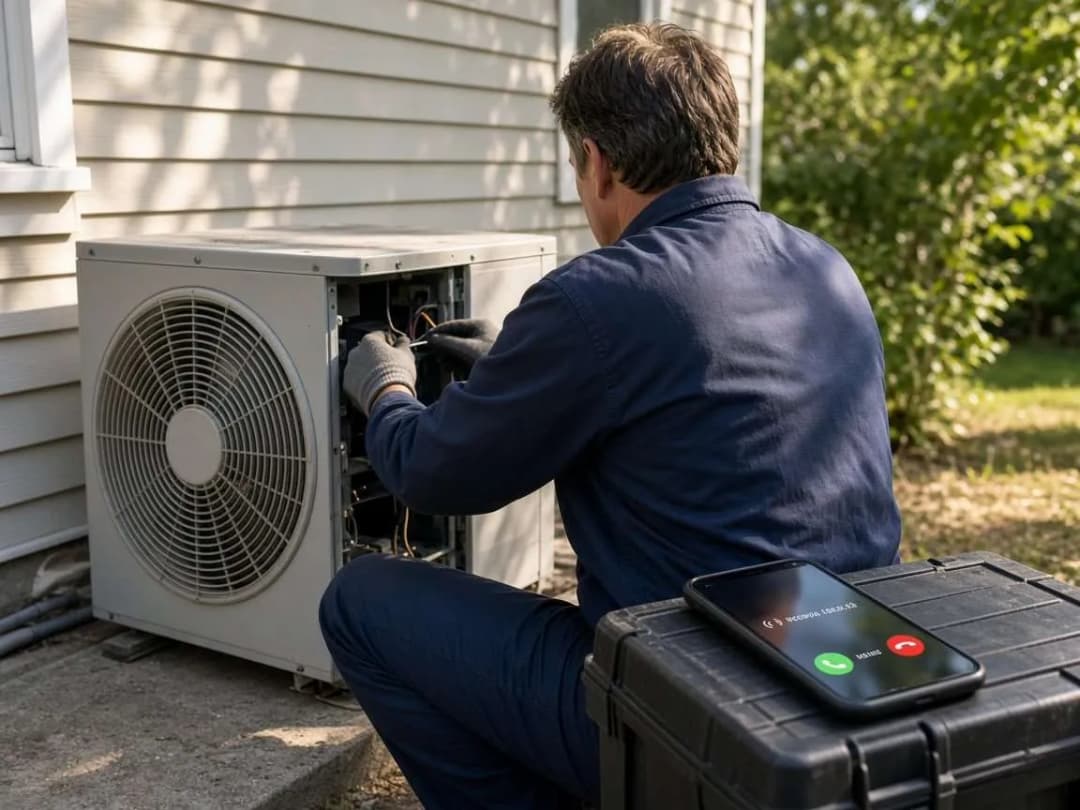
A hypothetical example: an HVAC company gets 200 calls a month and misses 40. If a third of those are real prospects (about 13), it closes 30% of prospects (about 4 jobs), the average first job is $300, and the AI captures half of them, that is about $600 a month recovered. Against a $150 plan, that pays. Now run the cautious version: 25 missed calls, a quarter of them real, 25% close rate, 40% captured. That is about $190, only a little above the cost of the plan. Calilio’s advice is the right test: if the cautious case still comes out ahead, the purchase stands on its own. If it only works with optimistic inputs, run a trial before signing anything long.
NextPhone’s version is even simpler: if one caller a month who would have hit voicemail becomes a customer worth more than the plan, it has paid for itself. For a plumber or a law firm that might be a single job. For a hair salon booking $40 appointments, it takes a lot more.
Where AI answering goes wrong
The skeptics have real points, and an honest setup plans for them.
- Emotional or high-stakes calls. A homeowner with water coming through the ceiling, or a patient in pain, wants a person. If most of your calls look like that, the AI will hand off most of them and save little.
- Complicated quotes. An AI can collect the details for a quote. It shouldn’t invent a price. Set it up to capture information and promise a callback, not to negotiate.
- Bad handoffs. The worst experience is a caller who asks for a human and gets stuck in a loop. Set clear transfer rules (“emergency,” “speak to someone,” existing customers) and test them yourself.
- Thin setup. An agent loaded with a one-paragraph description of your business will give vague answers. Calilio lists poor setup as one of the main reasons these systems lose business instead of recovering it.
- Low call volume. If you get a few calls a week and miss almost none, there is nothing to recover.
For very low volume, a cheaper fix may be enough: a clear voicemail greeting, an automatic text back after a missed call, or phone routing that rings two people before going to voicemail.
How to test an AI receptionist for 30 days before you commit
Don’t sign an annual contract based on a demo call. Run a month-long test with a baseline.
- Weeks 0 to 2, before launch: record total calls, missed calls, after-hours calls, and how fast voicemails get returned. This is your baseline.
- Launch on overflow only. Have the AI answer after hours and when your line is busy, while your team keeps answering during the day. Your best customers still reach a person, and the test measures the calls you were losing.
- Listen to calls every week. Sample 10 to 20 calls. Check that answers were right, bookings landed in the calendar, and transfers reached someone.
- Track what it produced. Count appointments booked, messages taken, transfers, and hang-ups. Note which bookings turned into paid jobs.
- Day 30: compare the missed-call rate against the baseline and rerun the missed-call math with real numbers. Keep it, adjust the script, or cancel.
Pick a month-to-month plan for the test, and confirm you can export call recordings and transcripts if you leave.
If you’d rather not build and tune it yourself, we set up an AI voice agent for your business line around your call flow, calendar, CRM, and transfer rules. There’s no package price; after a short discovery call we send a scoped quote based on your call volume and integrations.